
Gravel vs Crushed Stone: What’s Best for Your Project?
Aggregates are the foundation of countless construction and landscaping projects, providing stability, drainage, and support where it matters most. Gravel and crushed stone are two common choices, but their differences can make each better suited to certain applications. Understanding how they compare can help you choose the right aggregate for your project.
What Are Aggregates?
Aggregates are granular materials such as sand, gravel, and crushed stone that are used throughout construction and landscaping. In Ontario, aggregates are essential to everything from roads and buildings to major public infrastructure.
Depending on the product, aggregates can provide structural support, improve drainage, create a compact base, or add a decorative finish to an outdoor space. They are also a major component of concrete, where materials such as sand, gravel, and crushed stone are combined with cement and water. Because aggregates serve so many purposes, there is no single product that works best everywhere. Size, shape, compaction, drainage, load requirements, and appearance all need to be considered.
What Is Gravel?
Gravel generally refers to naturally occurring pieces of rock that have been broken down and shaped through natural processes. Compared with mechanically crushed stone, gravel commonly has smoother, more rounded edges.
That shape affects how the material behaves. Rounded pieces do not lock together as tightly as angular crushed material, leaving more space between individual stones. Depending on the specific product, that can make gravel useful where drainage is a priority. Gravel also has a natural appearance that works well in visible landscaping applications. It can be used to add texture to pathways, garden beds, borders, and other outdoor areas without making the finished space feel overly formal.
The aggregate options at kreitmaker include products such as 3/4" Round & Clear and Pea Stone, along with a selection of larger decorative river rocks and pebbles.
What Is Crushed Stone?
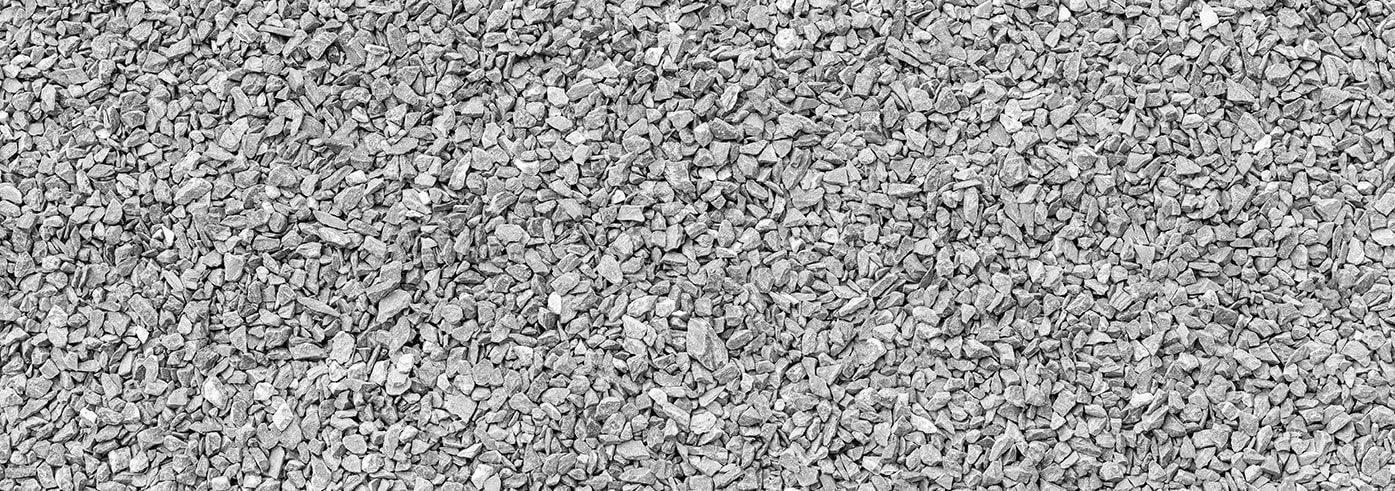
Crushed stone is produced by mechanically breaking larger rock into smaller pieces. This process creates more angular particles with rough edges. Those angular edges are one of crushed stone's biggest advantages. When the material is placed and compacted, the pieces can interlock to create a stable surface or base. For that reason, crushed aggregates are commonly used in applications where stability and load support are important.
Different crushed products also behave differently depending on their particle size and whether they contain fines, which are tiny particles of crushed rock and stone dust. These smaller particles help fill gaps between larger stones, allowing the material to compact into a firm, stable base. In contrast, clear crushed stone contains little to no fines, leaving more space for water to drain through.
kreitmaker's aggregate selection includes products such as 3/4" Clear Limestone, Crusher Run, Granular A, HPB, and Limestone Screenings, providing options for different base, bedding, and drainage requirements.
Gravel vs. Crushed Stone: What's the Difference?
The most noticeable difference between gravel and crushed stone is typically the shape of the material. Natural gravel tends to have smoother, rounder pieces, while crushed stone has more angular edges created during processing. That difference influences everything from compaction to appearance.
Crushed aggregate is often preferred for structural bases because angular pieces can lock together effectively when compacted. Depending on the gradation, it can create a firm foundation beneath surfaces such as driveways, patios, pavers, and walkways. Gravel, particularly rounded or clear products, may be better suited to applications where drainage or appearance is more important than tight compaction.
However, choosing between them is not simply a matter of deciding between "gravel" and "crushed stone." The specific aggregate product matters just as much. Particle size, the presence or absence of fines, drainage requirements, and expected loads all affect performance.
Which Aggregate Should You Use for Your Project?
The best place to start is with the job the aggregate needs to perform.
Driveways & Pathways
For a driveway or pathway that requires a stable base, a compactable crushed aggregate is often a practical choice. Crushed limestone, Crusher Run, and other graded materials can provide the stability required beneath the finished surface.
If the aggregate itself will remain visible, appearance and drainage may become equally important considerations. Decorative gravel or stone can provide a more finished look while creating a durable outdoor surface.
Patios & Pavers
Aggregates are essential beneath patios, pavers, and other hardscape features. The base needs to provide stability and help support the finished surface over time. Depending on the system and specifications, products such as Granular A, HPB, or limestone screenings may be used at different stages of a hardscape project.
Because these materials have different compaction and drainage characteristics, it is important to choose a product that matches the requirements of the specific installation.
Drainage
When water needs to move through the aggregate rather than being trapped within it, clear stone is a common choice. Clear stone contains little to no fine material, leaving open spaces that allow water to pass through. It is commonly used around foundations, retaining walls, weeping tile systems, and French drains.
This is also a good example of why simply asking for "gravel" may not be specific enough. The right aggregate should be selected based on what the drainage system needs to accomplish.
Landscaping
When aggregate will be visible, function is only part of the decision. Gravel, river rock, pebbles, and decorative aggregates can be used to define garden beds, edge pathways, create ground cover, and introduce colour and texture into landscape designs.
These materials can provide a durable, relatively low-maintenance alternative to organic ground coverings. For landscaping projects, consider the size, colour, texture, and shape of the aggregate alongside practical factors such as drainage and foot traffic.
Commercial Construction & Site Development
Aggregates also play a foundational role in larger commercial and site-development projects. They can be used for backfill, base preparation, drainage systems, access areas, and other applications where stable ground conditions are required.
On these projects, material specifications become particularly important. The aggregate needs to meet the performance requirements of the application rather than simply fitting into a broad category such as gravel or crushed stone.
Start With the Right Foundation
So, is gravel or crushed stone better? Neither material wins in every situation. Crushed stone is often the better choice when compaction, stability, and structural support are priorities. Gravel and other rounded aggregates can be useful when drainage, natural appearance, or decorative value are more important. In many projects, several types of aggregate may be used together, with each performing a different job. The key is to think beyond the surface. A finished driveway, patio, landscape, or commercial site depends on the materials supporting it underneath.
kreitmaker supplies a broad range of aggregates in Toronto for residential, commercial, construction, and landscaping projects, including clear limestone, round stone, Crusher Run, Granular A, HPB, limestone screenings, pea stone, and decorative aggregates. Our team can help you compare your options, calculate how much material you need, and select an aggregate suited to the demands of your project.
Building from the ground up? Explore kreitmaker's full range of aggregates or contact our team for personalized, expert advice on the right material for your project.