
Brick vs Stone Exteriors: Durability & Style Compared
Brick and stone are both premium exterior materials known for their durability, timeless appeal, and long-term value. While each offers excellent performance, they differ in appearance, maintenance requirements, and overall cost. Understanding these differences can help you choose the material that best suits your project's style, budget, and priorities.
Why Your Exterior Material Matters
An exterior finish does much more than define the appearance of a project. It also affects maintenance requirements, long-term durability, property value, and overall design flexibility. Unlike finishes that may need replacing every couple of decades, quality masonry materials can last for generations when properly installed and maintained. That makes selecting the right material an investment rather than simply a design decision. The best choice depends on factors such as your architectural style, desired appearance, maintenance expectations, and budget.
Brick Exteriors: Classic Style with Proven Performance
Brick has remained one of the most popular exterior materials for centuries because it offers an excellent balance of beauty, consistency, and durability. Available in a wide range of colours, finishes, textures, and sizes, today's brick products can complement both traditional and contemporary architecture.
From classic red brick to smooth charcoal, handmade European brick, glazed finishes, and long-format styles, homeowners have far more design flexibility than ever before. Because brick is manufactured to consistent dimensions and colours, it creates clean, uniform façades that suit everything from custom residential projects to commercial buildings. Brick is commonly used for:
- Full exterior façades
- Accent walls
- Entryways
- Chimneys
- Landscape features and outdoor kitchens
Another advantage is the impact mortar colour has on the finished appearance. The same brick can create dramatically different aesthetics depending on whether it's paired with light, dark, or matching mortar.
Stone Exteriors: Natural Character & Lasting Visual Impact
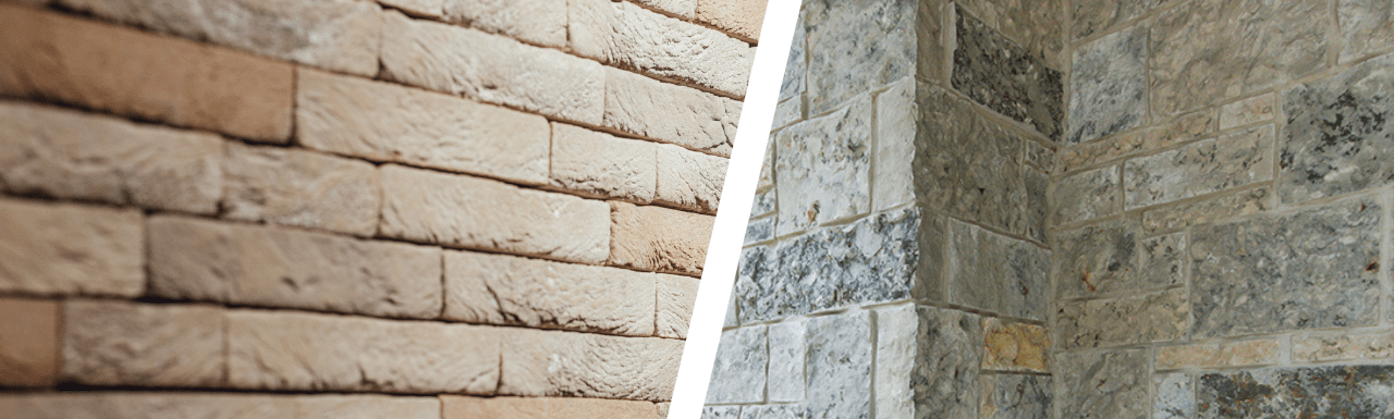
Stone creates a distinctive appearance that's difficult to replicate with any other building material. Unlike brick's consistent appearance, stone introduces variation in colour, texture, shape, and depth, giving projects a more organic character. There are two primary categories of stone used for exterior applications:
Natural Stone
Natural stone is quarried directly from the earth and cut into usable pieces. Every piece is unique, creating rich texture and natural variation across the finished exterior. Popular options include limestone, granite, sandstone, and fieldstone, each offering its own colour palette and visual character.
Manufactured Stone
Manufactured stone is designed to replicate the appearance of natural stone while offering greater consistency in colour, profile, and sizing. High-quality manufactured stone provides excellent visual appeal and allows designers to achieve many different architectural styles.
Both natural and manufactured stone are commonly used for:
- Full façades
- Feature walls
- Foundation accents
- Columns
- Outdoor living spaces
- Landscape walls
Brick vs. Stone: Which Is More Durable?
Both brick and stone are exceptionally durable materials capable of lasting for decades. Brick has an outstanding track record for longevity. Many brick buildings remain structurally sound after well over 100 years with relatively modest maintenance. Modern facing brick is manufactured to withstand moisture, freeze-thaw cycles, and everyday weather exposure while maintaining its appearance.
Natural stone is equally impressive. Because it originates from naturally durable rock formations, many stone products can last for centuries. Different stone types vary slightly in hardness and weather resistance, but quality natural stone performs exceptionally well in Canadian conditions. Manufactured stone also offers excellent durability when sourced from reputable manufacturers, although its lifespan is generally shorter than that of premium natural stone.
Overall, both materials provide outstanding long-term performance. In most residential applications, maintenance practices and product quality often have a greater impact on longevity than whether you choose brick or stone.
Comparing Maintenance Requirements
One reason masonry products remain so popular is their relatively low maintenance. Brick requires very little ongoing care beyond occasional cleaning to remove dirt or organic growth. Mortar joints may eventually require repointing after many decades, but routine upkeep is generally minimal.
Stone is similarly low maintenance, although natural stone's textured surface can collect more dirt depending on the type of stone selected and its location on the project. Manufactured stone also requires little routine maintenance, but it's important to follow the manufacturer's recommendations for cleaning methods to preserve the finish. Regardless of the material, harsh chemical cleaners and aggressive pressure washing should generally be avoided unless specifically recommended for the product.
Cost Comparison: Initial Investment vs. Long-Term Value
Brick and stone occupy different price points, but cost should always be viewed over the lifespan of the material rather than simply the initial purchase price. Generally speaking, brick offers a moderate upfront material cost while providing excellent long-term value thanks to its durability, low maintenance requirements, and exceptionally long lifespan.
Manufactured stone typically falls into the moderate price range, offering very good long-term value by delivering the appearance of natural stone with strong durability and design flexibility. Natural stone generally represents a higher initial investment, but many homeowners consider it an excellent long-term value because of its unmatched character, premium appearance, and ability to last for generations.
Style Comparison: Which Material Fits Your Design?
The choice between brick and stone frequently comes down to aesthetics.
Choose Brick If You Want:
- Clean architectural lines
- Consistent colour and texture
- Traditional (such as hand-moulded brick) or contemporary (such as long format brick)
- Wide colour and finish selection
- Flexible mortar colour options
Brick works exceptionally well for projects seeking a refined, structured appearance.
Choose Stone If You Want:
- Natural texture
- Organic variation
- Bold visual impact
- Rustic, traditional, or luxury aesthetics
- Old stone house look
- Greater depth and dimension
Stone naturally creates focal points and adds visual richness through its irregular textures and colour variation. Many designers also combine brick and stone to achieve balance, using brick as the primary exterior material while incorporating stone around entrances, foundations, or architectural features.
How Do Brick and Stone Perform in Canadian Climates?
Both brick and stone perform exceptionally well across Canada when quality materials are selected. Brick is engineered to withstand repeated freeze-thaw cycles, moisture exposure, and seasonal temperature changes without losing its structural integrity or appearance.
Natural stone has proven its durability over centuries of use in demanding climates and continues to perform extremely well in Canadian weather conditions. Manufactured stone has also advanced considerably, with products designed specifically for freeze-thaw performance. Rather than climate alone, product quality and selecting materials appropriate for the intended application are the most important factors in long-term performance.
Brick vs. Stone: Which Is Right for Your Project?
Both brick and stone are premium exterior materials that offer lasting durability, curb appeal, and long-term property value. The better choice ultimately comes down to your priorities. Brick is ideal if you prefer a consistent, timeless appearance with minimal maintenance and plenty of flexibility in colour, texture, finish, and format. Stone, whether natural or manufactured, offers greater variation, texture, and depth for projects where distinctive architectural character is the goal.
From a resale perspective, both materials can be attractive to buyers because of their durability and enduring appearance. Rather than one being inherently better for property value, the strongest choice is generally the material that complements the project's architecture and maintains its appeal over time.
Whether you're drawn to the timeless consistency of brick or the distinctive character of stone, choosing the right exterior material starts with seeing your options in person. Visit one of kreitmaker's idea spaces to explore a wide selection of premium brick and stone products, compare colours, textures, and finishes, and get personalized guidance from our experienced team. With Canada-wide shipping and expert customer service, we're here to help you find the perfect materials for your next project.